Claude 3.7 Review: Anthropic’s AI Is Getting Dangerously Good
Executive Summary
The generative AI sector continues rapid advancement, with model capability gaps narrowing across major vendors. This independent technical assessment evaluates Claude 3.7, Anthropic’s flagship hybrid reasoning model. The testing focuses on long-context synthesis, complex logical reasoning, coding execution, multi-modal analysis and agentic workflow automation. Over a four-week benchmarking cycle, the evaluation quantifies performance strengths, operational constraints, and competitive positioning, to assess whether Claude 3.7 represents a material leap forward for knowledge-intensive enterprise and professional workloads.
Evaluation Methodology
Benchmarking was performed across five weighted assessment dimensions. Standardized test prompts and evaluation datasets were used for direct side-by-side comparison against OpenAI GPT-5.6, Gemini Advanced, and leading open-source reasoning models. Test workloads included long-document synthesis, software engineering debugging, financial data analysis, legal contract review, and multi-step agent automation tasks.
- Long Context Handling & Document Synthesis (30%)
- Complex Reasoning & Problem Solving (25%)
- Code Generation, Review & Debugging (20%)
- Multimodal Input & Tool Use (15%)
- Pricing, API & Enterprise Deployment (10%)
Core Platform Architecture & New Capabilities
Claude 3.7 marks Anthropic’s first hybrid reasoning model. Its defining innovation is Extended Thinking Mode, a configurable reasoning budget that allows the model to allocate variable computational effort for complex problems. Users and API developers control the allocated thinking budget; simpler tasks execute with near-instant responses, while intricate analytical challenges trigger deeper, step-by-step reasoning whose internal logic is visible for audit and review.
Key 2026 platform upgrades integrated within the 3.7 release cycle:
- Expanded 2M-token native context window: Supports simultaneous ingestion and analysis of hundreds of documents, full code repositories, legal contracts, audit records, and multi-page scanned technical schematics in a single prompt.
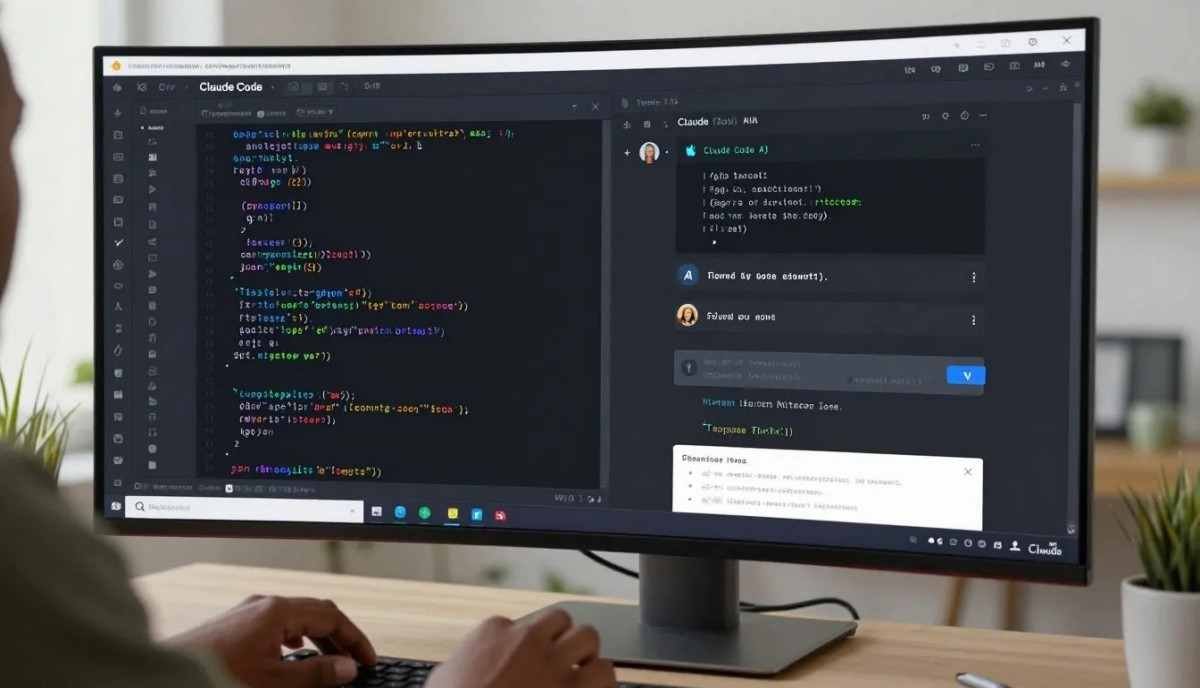
- Claude Code CLI Agent: A command-line coding agent that can operate directly within local development environments, perform repository-wide refactoring, vulnerability scanning, and end-to-end feature implementation.
- Enhanced Computer Use capability: The model can interpret desktop screenshots, read screen content, and execute guided sequences of actions across software applications, with strengthened safeguards against prompt injection attacks.
- Advanced multimodal parsing: Improved interpretation of handwritten notes, complex charts, engineering diagrams, scanned forms and mixed-format PDF documents.
- Constitutional AI alignment refinements: Updated safety guardrails to reduce harmful outputs while minimizing over-refusal on legitimate high-complexity business inquiries.
Performance Assessment
Long Context Handling & Document Synthesis (Score:9.4/10)
This remains Claude’s strongest competitive differentiator. During testing, Claude 3.7 demonstrated consistent fidelity when cross-referencing details across thousands of pages of source material. Unlike competing models that degrade in accuracy as context volume expands, it maintains stable recall, cross-reference, and contradiction detection over the full 2M-token window.
For enterprise use cases such as contract due diligence, regulatory document review, and academic literature synthesis, this capability delivers substantial workflow efficiency gains. Teams can consolidate dozens of source documents and request comparative analysis, conflict identification, risk extraction, and executive summary generation in a single run. The primary limitation: document formatting irregularities, heavily scanned low-resolution scans with poor OCR quality, can reduce extraction accuracy.
Complex Reasoning & Problem Solving (Score:9.1/10)
Extended Thinking Mode delivers measurable improvements for multi-step logical deduction, mathematical modeling, cybersecurity challenge solving, and structured decision analysis. Benchmark tests including logic puzzles, quantitative business modeling and cybersecurity CTF challenges show measurable performance uplift versus prior Claude generations.
Visible reasoning also delivers audit value for regulated industries: stakeholders can review the model’s intermediate logical steps to validate how conclusions were derived. This transparency is valuable for finance, legal, and compliance teams requiring traceable reasoning. Limitations persist for highly abstract, open-ended theoretical reasoning. In rare cases, extended thinking can amplify flawed assumptions if incorrect premises are embedded in source inputs.
Code Generation, Review & Debugging (Score:9.0/10)
Claude 3.7 delivers major gains in end-to-end software engineering workflows. The integrated Claude Code agent excels at repository-level analysis, legacy code migration, vulnerability identification, unit test creation, and cross-language refactoring. Testing across Python, JavaScript, Rust, and SQL shows strong capability for full-stack prototyping and debugging.
Where traditional coding assistants handle isolated code snippets, Claude 3.7 can trace dependencies across hundreds of source files, identify breaking changes, and generate migration scripts for framework upgrades. It performs best for well-defined, structured engineering tasks. For highly experimental research code or obscure niche programming frameworks, outputs may require heavier human validation.
Multimodal Input & Tool Use (Score:8.8/10)
The model reliably processes mixed text-image inputs, screenshots, handwritten notes, tables and diagrams. Computer Use functionality enables guided cross-application automation, with improved resistance to prompt injection attacks. It can extract data from screenshots, interpret dashboard visualizations, and perform structured data entry across desktop software.
Complex multi-step automation workflows still require careful prompt engineering. Sequences with many branching conditional logic may require human checkpoints to avoid compounding small errors across long task chains.
Pricing & Enterprise Deployment (Score:8.5/10)
Claude 3.7 maintains stable token pricing from prior generations. API pricing is $3 per million input tokens and $15 per million output tokens, including tokens consumed during extended thinking.
- Free Tier: Limited message quota for evaluation and prototyping; Extended Thinking Mode disabled.
- Claude Pro ($20/month): Unlimited standard usage, full access to 3.7 and Extended Thinking, priority inference speed, file uploads up to 2M-token limits.
- Team Plan ($28 per user/month): Collaborative workspaces, team prompt libraries, audit logs, and shared billing for small teams.
- Enterprise Plan (Custom pricing): Dedicated tenancy, SSO, data isolation, custom model fine-tuning, SLAs, dedicated technical account management, and compliance controls for regulated sectors.
Strengths & Limitations
Core Advantages
- Industry-leading native long-context processing, stable retention across massive document sets.
- Hybrid extended reasoning with transparent, auditable thought processes.
- Enterprise-grade document analysis for legal, audit, research and compliance workflows.
- Powerful repository-wide coding analysis and code refactoring via Claude Code.
- Strong constitutional AI safety framework, with reduced blanket refusals for legitimate business tasks.
- Robust API and cloud deployment options across Amazon Bedrock, Google Vertex AI and Anthropic’s native platform.
Key Constraints
- Extended Thinking Mode increases token consumption, raising operational costs for heavy analytical workloads.
- Complex multi-branched agent workflows require manual checkpoint oversight to mitigate error propagation.
- Multimodal performance degrades significantly with low-quality, poorly scanned source documents.
- Real-time web browsing capability remains less mature than competing solutions.
- Occasional reasoning drift may appear for highly abstract, open-ended theoretical analysis.
Competitive Benchmark Comparison
Claude 3.7 vs GPT-5.6 (OpenAI) GPT-5.6 delivers a broader integrated ecosystem of agents, image generation and real-time web search. Claude 3.7 outperforms in long-document synthesis and nuanced, careful prose analysis. GPT is preferable for mixed-media creative workflows; Claude 3.7 is superior for deep document review and legal/contract analysis.
Claude 3.7 vs Gemini Advanced (Google) Gemini integrates tightly within Google Cloud and Google Workspace and offers strong multi-modal video analysis. Claude delivers more consistent long-context retention and fewer factual inconsistencies across extended analysis tasks. Gemini is suitable for teams heavily invested in Google’s cloud ecosystem.
Claude 3.7 vs Open-Source Reasoning Models Open-source alternatives offer self-hosting, data residency control and cost advantages. However, their reasoning stability, context fidelity and coding performance fall behind Claude 3.7 for complex enterprise workloads, and they demand significant DevOps overhead for reliable production deployment.
Use-Case Alignment
Claude 3.7 is optimized for legal teams, corporate audit departments, research analysts, software engineering teams, and strategy consultants who regularly process and synthesize large volumes of complex text and technical documentation. It delivers maximum ROI when tasks require deep cross-document comparison, risk assessment, and careful logical deduction.
Alternatives should be considered in the following scenarios:
- Real-time web research and multi-media creative generation: GPT-5.6 offers stronger native integration.
- Simple short-form content generation with tight budget constraints: lighter open-source models are more economical.
- Low-latency simple chatbot interfaces: smaller specialized models provide lower cost and faster inference.
Final Verdict
Overall Score:9.1/10 Claude 3.7 represents a substantial advancement in reasoning capability, particularly for knowledge-heavy enterprise work. Its hybrid extended reasoning and industry-leading 2M-token context window create tangible advantages for teams performing contract review, audit analysis, codebase refactoring, and research synthesis. The model’s transparent thought process adds auditability, a valuable feature for regulated industries.
The model carries operational tradeoffs. Extended reasoning increases token expenditure, and complex agent automation workflows still require human oversight. Still, for teams focused on deep document analysis and rigorous logical reasoning, Claude 3.7 sets a new benchmark.
For enterprise and professional users prioritizing accuracy, traceable reasoning and large-document synthesis, Claude 3.7 is dangerously capable and one of the most powerful general-purpose reasoning models available on the market in 2026.
Have you integrated Claude 3.7 into your business workflows? What enterprise workloads have benefited most from its long-context and reasoning capabilities? Share your observations in the comments section.